
Do You Need Flood Insurance in Katy?
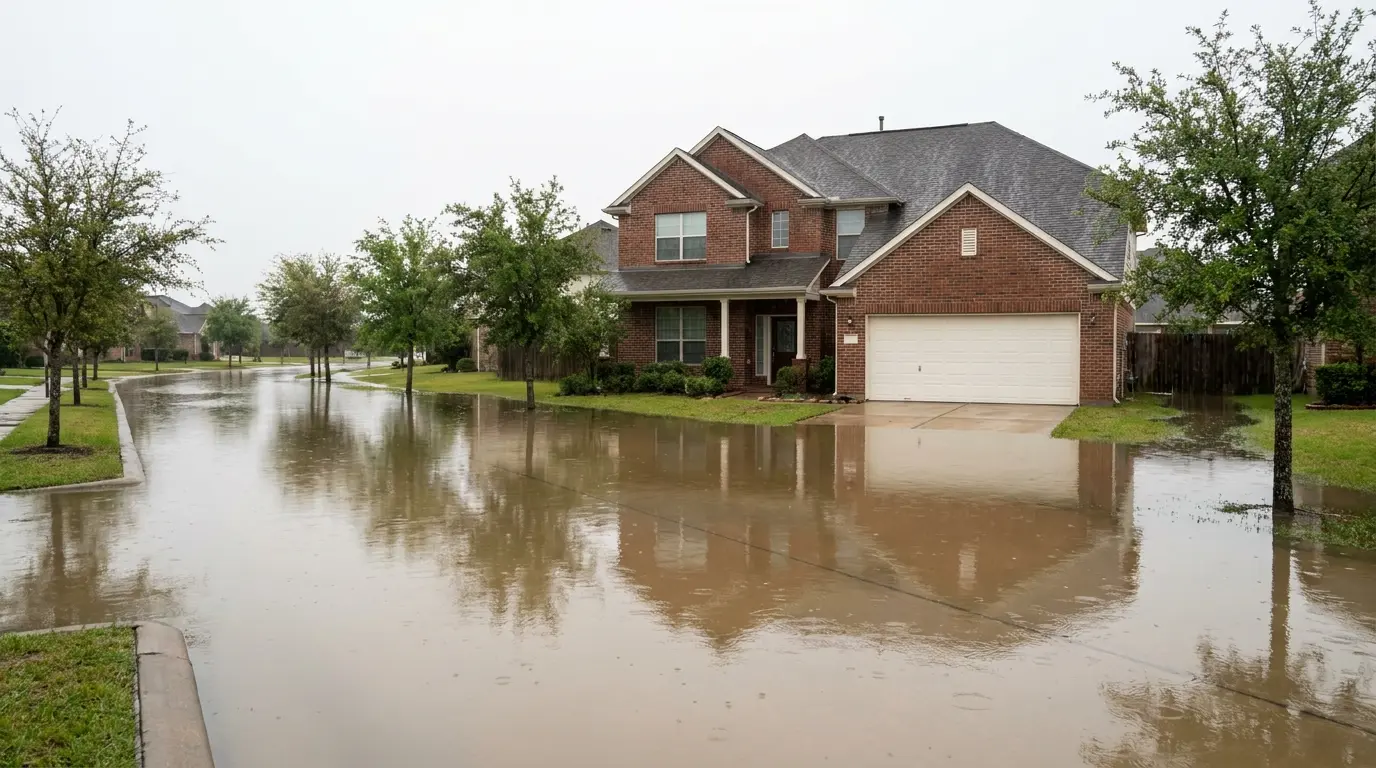
You have to carry flood insurance in Katy only in some cases, but it deserves a hard look in all the others. FloodSmart is the Federal Emergency Management Agency (FEMA) site for the National Flood Insurance Program (NFIP). It says that if you own a property in a high-risk flood zone and have a federally backed mortgage, you must buy flood insurance as a condition of that loan. The highest-risk zones, it says, are marked A or V on FEMA flood maps, and V and VE zones are high-risk coastal areas with an added hazard from storm waves. A homeowners policy probably won't fill the gap: FloodSmart's eligibility page says most homeowners insurance does not cover flood damage. If water does get in, we take out the water and dry the structure; that is our flood cleanup work.
Get Your Quote
Ready to handle this with a pro?
You're reading about Who Has to Carry Flood Insurance in Katy. Get a fast quote for water damage restoration service in the Austin and Houston areas from Watchtower Water Damage and Fire Restoration.
Who Has to Carry Flood Insurance in Katy?
Two facts decide the federal mortgage requirement: your flood zone and your loan. FloodSmart lists zones A, AE, AH, AO, AR and A99 as high-risk flood areas, along with the coastal V and VE zones. It says that in communities that participate in the NFIP, flood insurance is mandatory in those zones if a mortgage is government-backed. Outside those zones, or without that kind of mortgage, the rule does not apply, although FloodSmart still strongly recommends coverage.
Katy sits at the intersection of Harris, Waller and Fort Bend counties, according to the Texas State Historical Association's Handbook of Texas, so check your zone by address. FloodSmart points homeowners to the FEMA Flood Map Service Center or the local floodplain administrator for their flood map and zone.
Two other things can make it mandatory for a Katy home. FloodSmart says some banks require flood insurance even if you don't live in a high-risk area, so ask your lender about its terms. It also says a property that has received federal disaster assistance must have flood insurance to qualify for future disaster assistance. FloodSmart ties that requirement to the property, so it passes to the next owner. For example, if you are buying a Katy house that has flooded, ask whether it ever received federal disaster aid.
The Texas Office of Public Insurance Counsel (OPIC) says the NFIP provides most flood insurance policies, and that some insurance companies offer their own flood policy or add flood coverage to a home policy as an endorsement.
Do Katy Homes Outside the Flood Zone Need Flood Insurance?
Outside a high-risk zone, flood insurance is your choice unless your lender or the home's disaster-aid history says otherwise. On r/Katy, a Katyland resident wrote that the subdivision had never flooded, not even during Hurricane Harvey. The same post called flood insurance "an expense I'd rather not pay if I don't need it." FloodSmart says every zone carries a flood risk. Its renewal page says that from 2014 to 2024, almost one third of NFIP flood insurance claims came from areas outside high-risk areas.
In the National Weather Service's summary of Hurricane Harvey's impacts on Southeast Texas (August 25 to 29, 2017), the Harris County entry says the Addicks and Barker reservoirs both reached record pool elevations, flooding homes and businesses upstream and downstream. The summary's Fort Bend County entry reports significant flooding behind Barker Reservoir, including Cinco Ranch. The Harris County Flood Control District (HCFCD) calls it the first time homes upstream of the reservoirs had flooded from rising water in the reservoirs, which the U.S. Army Corps of Engineers owns and operates.
In Harris County, HCFCD's flood insurance page says approximately 68% of the structural damage reported in Harvey was outside the mapped 100-year floodplain. That figure is Harris County's alone; for Katy homes in Fort Bend or Waller County, FloodSmart's national share is the broader guide.
In a statement dated February 11, 2026, HCFCD said FEMA had released draft floodplain mapping information to Harris County's floodplain administrators the week before, as part of MAAPnext. HCFCD added: "Nothing changes right now related to flood insurance requirements or development regulations." As of October 2026, HCFCD's MAAPnext site still lists the map status as draft. It says FEMA's updated maps for Harris County "may affect which properties are required to carry flood insurance once they become effective."
On cost, FloodSmart says three things determine an NFIP rate: where your property is built, how it's built and what it would cost to replace it.
What Does Flood Insurance Cover in a Katy Home?
An NFIP policy has two parts, building coverage and contents coverage, and FloodSmart says they are typically purchased separately and have separate deductibles. FloodSmart's building list includes electrical and plumbing systems, furnaces and water heaters, built-in appliances like dishwashers, and permanently installed carpeting and cabinets. Its contents list includes clothing, furniture, electronic equipment, curtains, a washer and dryer, and portable and window air conditioners.
Say water from a flooded street spreads across the ground floor of a Katy two-story. By those lists, the water heater and built-in cabinets fall under building coverage. The sofa, the TV and the washer and dryer fall under contents coverage, if you bought it.
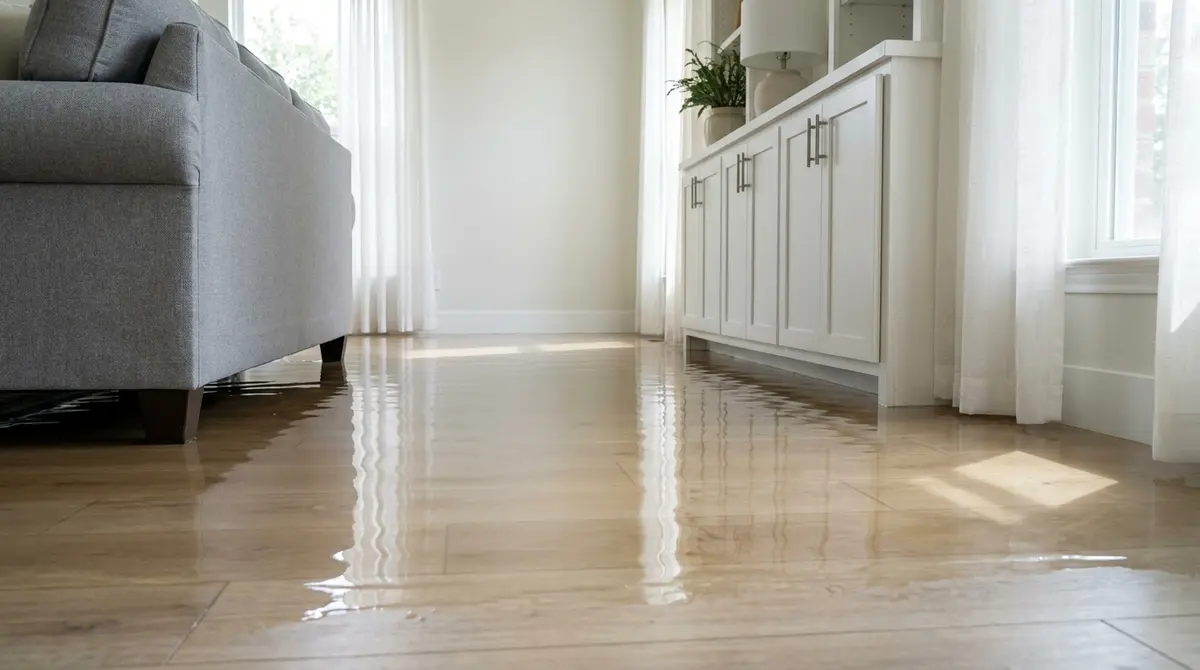
Some things stay outside the policy whatever caused the flood. FloodSmart lists a handful: currency, precious metals, stock certificates and other valuable papers; cars and most self-propelled vehicles; personal property kept in basements; property outside the insured building, such as landscaping, septic systems, decks, patios, fences and swimming pools; temporary housing and other living expenses during repairs; and financial losses from business interruption.
Where the water came from matters too. FloodSmart's claims page puts it as ground up or top down: an NFIP policy covers water entering your home from the ground up, such as flash flooding, heavy rainfall or an overflowing body of water, but not rain blown in by wind or coming through the ceiling from a damaged roof. Plumbing is separate. On r/Katy, someone shopping for a home asked whether burst-pipe water at their sister's house in Cinco Ranch "would fall under flood insurance too." OPIC lists broken pipes and plumbing overflows among the things flood insurance does not cover. That water is a homeowners insurance question, which our post on how Texas homeowners policies handle water damage walks through.
OPIC also notes that protection above the NFIP's coverage limits has to be bought elsewhere, so settle your limits with your agent before you buy.
Get Your Quote
Ready to handle this with a pro?
You're reading about How Long Before New Flood Insurance Starts in Katy. Get a fast quote for water damage restoration service in the Austin and Houston areas from Watchtower Water Damage and Fire Restoration.
How Long Before New Flood Insurance Starts in Katy?
Usually 30 days. FloodSmart says NFIP coverage goes into effect 30 days after your date of purchase. The Texas Department of Insurance (TDI) says most flood policies have a 30-day waiting period, so don't wait for an approaching storm to buy. Harvey shows why: the National Weather Service dates the storm's impacts on Southeast Texas from August 25 to 29, 2017. A new policy bought as it approached would have been in its waiting period for the whole storm, unless an exception applied.
FloodSmart lists four exceptions to the 30-day wait:
No wait if you buy flood insurance while making, increasing, extending or renewing a mortgage.
No wait if you change your flood insurance coverage while renewing your policy.
A one-day wait if your property is in a newly designated high-risk flood zone and you buy a policy within 12 months of the update.
A one-day wait if a flood is caused or worsened by a wildfire on federal land and you buy a policy within 60 days of the wildfire containment date.
In the Harris County part of Katy, the map-change exception is the one to watch if FEMA's new maps move your home into a high-risk zone when they take effect.
FloodSmart says flood policies do not renew automatically, so you renew every year through your agent, or take renewal questions to your mortgage lender if it requires the policy. It says coverage stays good for 30 days after the policy expires, and claims in that grace period are honored if you renew and pay the premium in full by its end. If the policy lapses, it says a new one takes 30 days to go into effect, with no coverage for a flood in between.
How Does a Katy Flood Insurance Claim Work After Water Gets In?
FEMA's NFIP Claims Checklist for Policyholders runs from the first call to an appeal. Here are its steps in order, with the safety warning from FloodSmart's recovery checklist added to step 1.
Safety first. Wait for floodwaters to recede and for emergency officials to say it's safe to return. Make sure electricity and gas are shut off when you go back, to avoid fire or injury. For added caution, have an electrician check the house before the power goes back on. Don't reenter until it is safe; you can file a claim before you return.
Report the claim. Call your insurance agent or provider as soon as possible, with your policy number if you have it. Confirm whether you have building coverage, contents coverage or both, and ask about limits and deductibles. With a mortgage, make sure the right mortgage company is on your declarations page. Log every conversation (date, time, name, assigned adjuster, what was discussed) with your insurer, adjusters, contractors and cleaners.
Prepare the claim. Your provider assigns an adjuster to contact you within 48 hours of your report. Don't discard anything before the adjuster sees it, unless it is a health hazard or local law requires you to discard it. Gather receipts or invoices if you have them.
Begin cleanup safely. Ask your insurer which cleaning and repair costs your policy covers. Separate damaged from undamaged property, and protect what is undamaged. Keep samples of any carpet, flooring or blinds you throw out.
Document the damage if it is safe. For building coverage, photograph and film all damage from several angles and distances, inside and out, including structural damage and waterlines. Record the make, model and serial number of appliances, electronics and other items of exceptional value; your flood policy lists the covered items. For contents coverage, list each damaged item with its description, value, make, model, serial number, quantity, approximate age and replacement cost value, and photograph or film it.
Meet the adjuster. Ask to see the adjuster's Flood Control Number card and government-issued photo ID. Ask your questions and hand over your documentation. You may request an advance partial payment.
Finalize the claim. Ask your insurer where to send your documentation. Submit all of it within 60 days of the flood, or within the timeframe your adjuster or insurer gives you. Review the adjuster's estimate carefully and work with them to correct mistakes. If you find more damage, a missed or misidentified item or a repair cost above the estimate, request an additional payment. You can ask at any time, even if you think the claim is settled.
After the claim. Keep all claim records. Complete repairs, and keep photos and receipts for them, since a future claim on the same item may call for proof of repair. Update your home inventory. If the claim is denied, you have the right to appeal to FEMA by mail or email within 60 days after you receive your insurer's letter.
FloodSmart's eligibility page says federal disaster aid comes only after a presidential disaster declaration, which most flood events don't get. FloodSmart says that aid typically comes as loans repaid with interest, while flood claim payments do not have to be paid back.
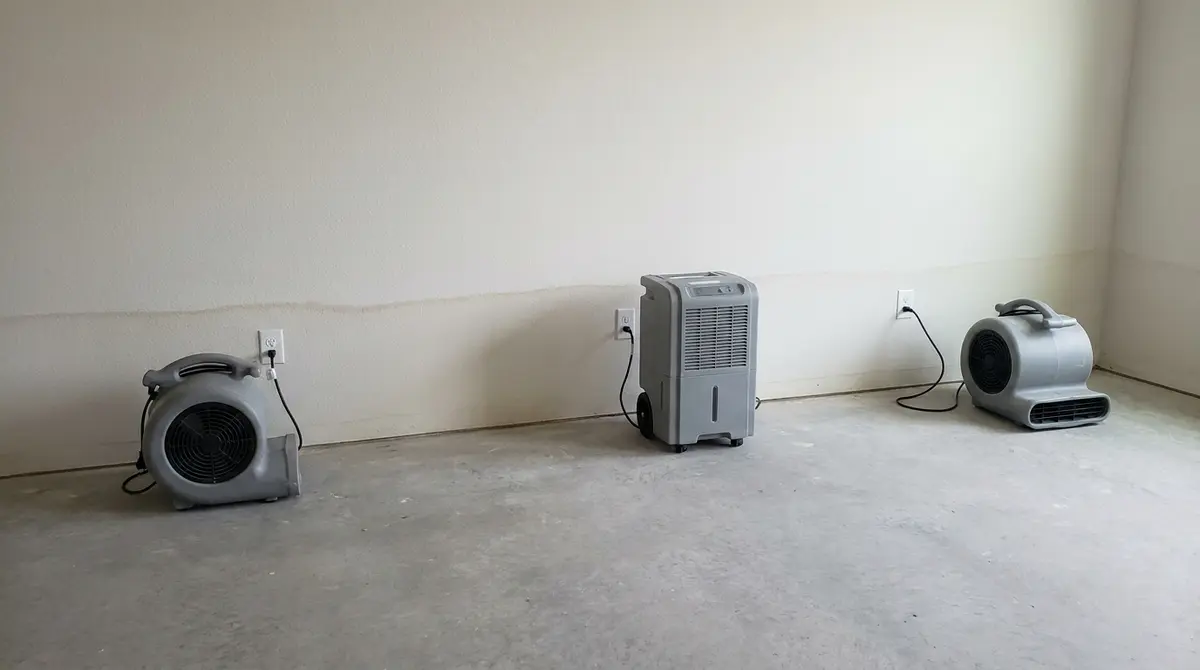
Here is where we come in. When flood water gets into a Katy home, we take out the water and dry the structure with air movers and dehumidifiers, and moisture readings tell us when it is dry. We document the loss with photos, moisture readings and an itemized scope, and we work with your adjuster; your insurer decides what the policy pays. Our page on water damage help in Katy and the insurance questions on our FAQ page have more.
The Bottom Line on Flood Insurance in Katy
In Katy, flood insurance is required when a home in a high-risk flood zone has a federally backed mortgage. A lender can also require it, and a property that got federal disaster aid needs it to qualify for future aid. In every other case it is your call. In Harris County, HCFCD says approximately 68% of the structural damage reported in Harvey was outside the mapped 100-year floodplain. In Fort Bend County, the National Weather Service reports significant flooding behind Barker Reservoir, including Cinco Ranch. FEMA's updated Harris County maps, still in draft, may change who has to carry flood insurance once they take effect.
An NFIP policy covers the building and belongings separately, leaves out things like cars, basement belongings and temporary housing, and starts 30 days after purchase unless one of FloodSmart's four exceptions applies. After a flood, FEMA's checklist puts safety first and asks for your documentation within 60 days of the flood, or within the timeframe your adjuster or insurer gives you. When water gets in, we take out the water, dry the structure and work with your adjuster.
Related Posts
Does Homeowners Insurance Cover Water Damage in Round Rock?
Most Texas home policies cover sudden, accidental water damage but usually not slow leaks; here is how forms and slab coverage work in Round Rock.
What Should You Do When Pipes Burst if You Live in Austin?
Pipe burst in your Austin home? Here is the first-hour order: electrical safety, the owner's shutoff valve, photos, drying and who to call next.