
What Should You Do When Pipes Burst if You Live in Austin?
When a pipe bursts in an Austin home, the first job is staying safe around electricity and the second is stopping the water. FEMA's Ready.gov flood safety advice says not to touch electrical equipment if it is wet or if you are standing in water. If Austin Water serves your home, it says to try the property owner's shutoff valve first, typically on your side of the water meter at the meter box, and to use the City shutoff valve in the meter box if you cannot find yours or it is damaged. Then move wet items to a dry room, as the Texas Department of Insurance (TDI) advises. If you have a claim, TDI also says to take pictures of the damage before making any repairs, if possible. Call a licensed plumber for the pipe. The water that already came out is the next job, and that is where our water damage restoration work begins.
Get Your Quote
Ready to handle this with a pro?
You're reading about Where Do Pipes Burst First in an Austin Freeze. Get a fast quote for water damage restoration service in the Austin and Houston areas from Watchtower Water Damage and Fire Restoration.
Where Do Pipes Burst First in an Austin Freeze?
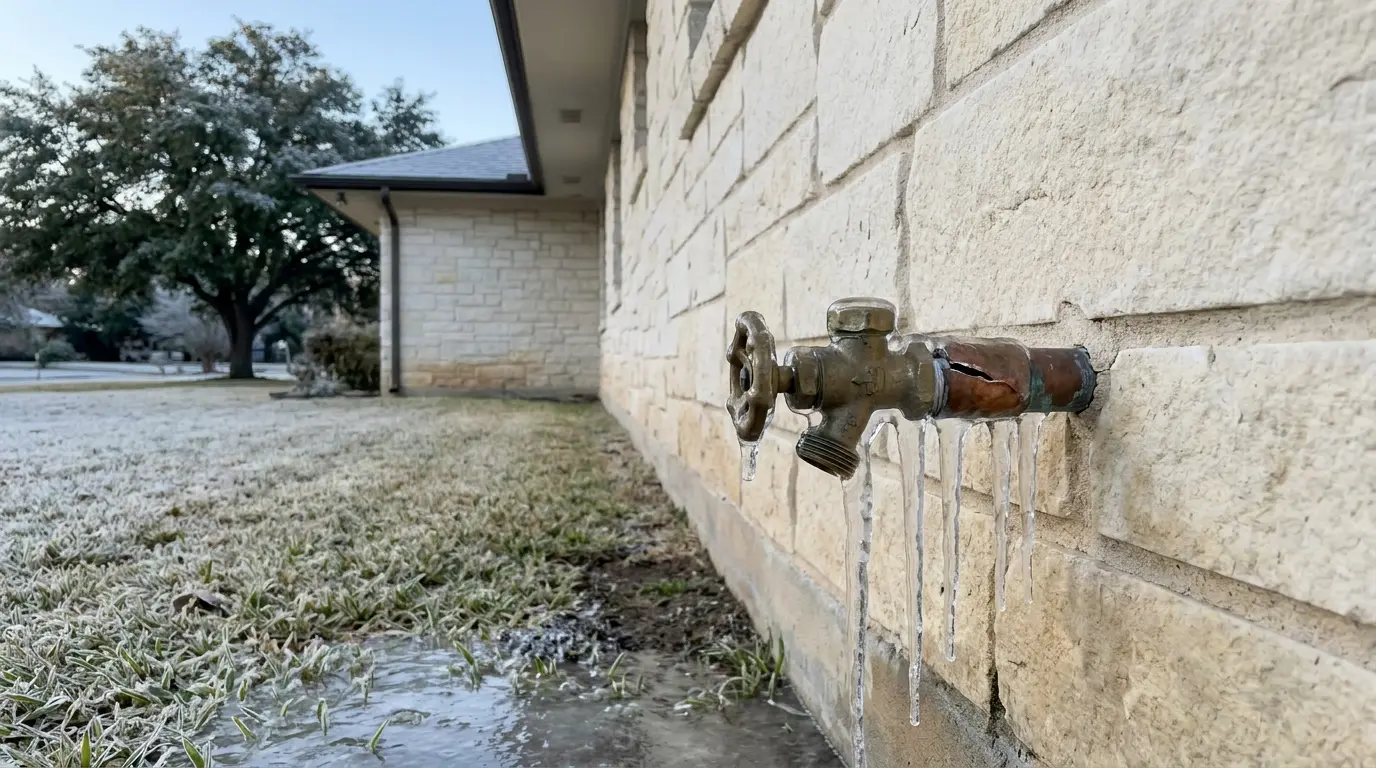
Pipes give out where the cold reaches them first. The American Red Cross explains why cold breaks a pipe at all: water expands as it freezes, that expansion puts tremendous pressure on metal or plastic pipes, and the pressure can break them. The same Red Cross page lists the pipes that freeze most often:
Pipes exposed to severe cold, like outdoor hose bibs, swimming pool supply lines and sprinkler lines.
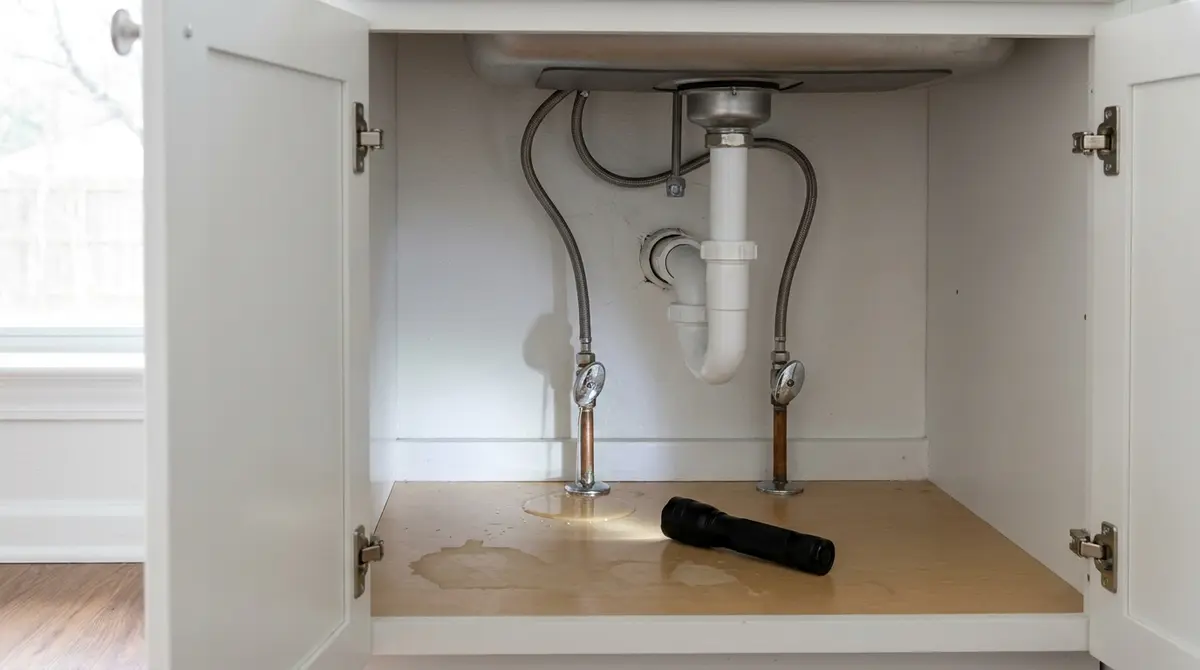
Water supply pipes in unheated spaces inside the home, like crawl spaces, garages and kitchen cabinets.
Pipes that run against exterior walls with little or no insulation.
For example, during the February 2021 freeze, one renter on r/Austin found water in a bedroom that shares an outside wall with an outdoor faucet, and another poster's washing machine pipe, also on an outside wall, burst.
Austin has seen this at scale. The City of Austin's open-data year-in-review of Winter Storm Uri, the February 2021 storm, records consecutive days of below-freezing temperatures. It counts 381 water line breaks in City pipelines and more than 200 apartment complexes that lost water because of private plumbing damage. Statewide, TDI says Texans filed more than 450,000 insurance claims after the storm, and that a lot of that damage was caused by water from broken pipes.
Austin Water's cold-weather tips aim at the same places. Before a freeze, insulate pipes in unheated or drafty areas, and turn off outside faucets and remove the hoses. During freezing weather, open the cabinet doors under sinks on exterior walls so warm air can reach the pipes.
How Do You Shut Off the Water When a Pipe Bursts in Austin?
One safety check comes before the valve, because the water may already have reached outlets, cords or appliances. FEMA's Ready.gov flood safety advice says not to touch electrical equipment if it is wet or if you are standing in water, and to turn off the electricity only if it is safe to do so. If water is around live outlets or cords, stay out of that room and go to the valve.
If Austin Water is your water utility, its cold-weather tips lay out the shutoff like this. If a different utility serves your address, follow its guidance instead.
Know the valve before you need it. Austin Water asks that everyone in your home knows where the main water shutoff valve is and that it stays clear of debris.
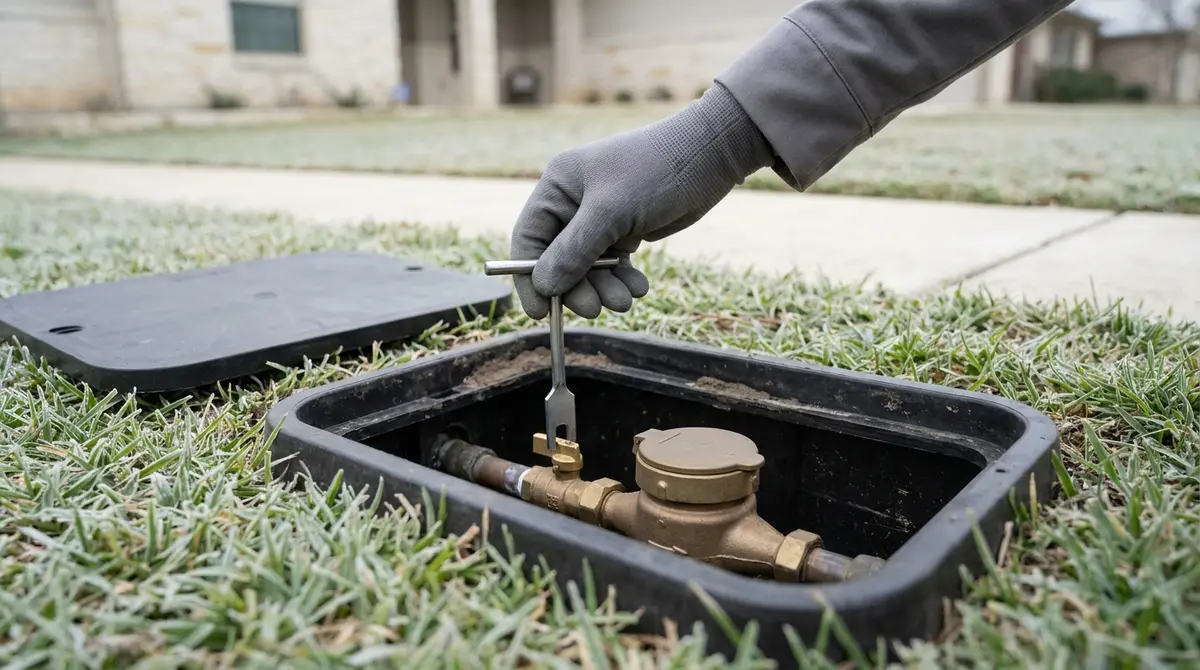
Try your own valve first. In an emergency, Austin Water says to first try the property owner's shutoff valve, typically on your side of the water meter at the meter box. Its water-leaks page diagrams a typical property: the meter box sits at ground level near the sidewalk, and the customer cut-off valve sits just past the property line on the private side.
If you rent, check with your property manager, as Austin Water tells renters to.
Fall back to the City valve. If you cannot find your valve or it is damaged, Austin Water says to use the City shutoff valve in the meter box. You may need a water meter key, which Austin Water says most hardware stores carry.
Open a smart meter lid the right way. For the newer My ATX Water smart meter box lids, Austin Water says a standard meter box lid key opens them: press down the spring mechanism before you turn the key, and take care not to damage the wires that connect the lid to the meter inside the box.
Practice this on a dry afternoon, not in the middle of a freeze. On r/Austin, posters have described owner valves buried under dirt or landscaping rock, a valve missing its handle, older houses with no accessible owner valve at all, and new plastic meter lids that would not open without the right key.
What Order Fits the First Hour of an Austin Burst Pipe?
TDI publishes tips to prevent more damage after a water leak or flood, and a second list of tips to follow if you have a claim. TDI does not number its tips. The order below is ours, with FEMA's electrical rule in front:
Keep clear of electricity. Do not touch electrical equipment if it is wet or if you are standing in water, and turn off the electricity only if it is safe to do so, per FEMA's Ready.gov. If reaching the breaker panel means standing in water or touching something wet, it is not safe, so leave it and keep everyone out of that room.
Stop the water. TDI says to stop the flow as soon as you can, and to know how to turn the water off at the main valve or at the valves under your sinks and near appliances. If Austin Water serves your home, that main valve is typically the owner's valve, on your side of the meter at the meter box.
Photograph the damage for a claim. If you have a claim, TDI says to make a list of your damaged property and, if possible, take pictures or videos of the damage before making any repairs. It also says not to throw away any damaged items until your adjuster has seen them.
Move wet things out. TDI says to move wet items to a dry room or an area with fresh air, and if you move items outside, to put them somewhere secure to protect them from theft. It also says to pull up wet carpets and rugs.
Get the standing water out and start drying. TDI says to remove pools of water and start drying the area as soon as you can. If you can't do that yourself, it says to use a service: search the internet for businesses that specialize in cleaning up after water damage, or ask your agent to help you find one. TDI adds that mold can start growing within a day after a leak, a subject we cover in a separate post.
Tell your insurance company. If you have a claim, TDI says to tell your company as soon as possible. It adds that you usually must report water damage that was hidden from view within days after you first see it.
Make temporary repairs only. If you have a claim, TDI says to make temporary repairs to protect your house and belongings, to hold off on permanent repairs until your insurance company sees the damage, and to keep receipts for any materials you buy.
For example, say the supply line under a kitchen sink on an outside wall split overnight. You stay off the wet floor by the dishwasher, close the owner's valve, photograph the cabinet and floor, and move the rugs to a dry room before anyone cuts out wet drywall.
Get Your Quote
Ready to handle this with a pro?
You're reading about Why Check for Burst Pipes in Austin Homes Once a Thaw Starts. Get a fast quote for water damage restoration service in the Austin and Houston areas from Watchtower Water Damage and Fire Restoration.
Why Check for Burst Pipes in Austin Homes Once a Thaw Starts?
Because a pipe that broke in the cold can start leaking once it warms up. TDI's winter safety tips say that if your pipes freeze, you should turn off the water at the shutoff valve, because that "prevents broken pipes from leaking into your house after they thaw."
Austin Water's cold-weather tips give the warning sign: if you have only a trickle of water or no water at all, you may have a frozen pipe or meter. One renter on r/Austin described "just a trickle from the cold tap" while the hot water still ran.
Austin Water's thawing steps go in this order:
Turn off the water at the shutoff valve to prevent flooding if a pipe has burst. Then open a faucet near the frozen section so steam can escape as you apply heat.
Never use an open flame, and if the floor is already wet, keep the first-hour rule: do not touch electrical equipment if it is wet or if you are standing in water. Apply gentle heat to the frozen section with a hair dryer, an electric heating pad or warm towels, starting from the faucet end and working back toward the wall.
Once water flows normally, check the pipe for cracks or leaks caused by freezing. If you find a leak, turn off the water at the shutoff valve immediately.
If those steps do not work, Austin Water says to contact a licensed plumber or your property manager.
Then check the rest of the house. The Red Cross advises checking all the other faucets in your home, because if one pipe freezes, others may freeze, too. Room by room:
The meter: write down a reading, then check it again a few hours later without using any water in between, as Austin Water's water-leaks page describes. If it moved, water ran somewhere.
Kitchen and bathrooms: run every faucet and look inside the sink cabinets on outside walls.
Exterior walls: look for damp drywall or a wet baseboard, especially behind an outdoor faucet.
If you will be away during a freeze, Austin Water's advice is to turn off your water at the meter and set your thermostat to 65 degrees or higher. Coming home after a freeze with the water left on? Run the checks above first.
Who Should Austin Homeowners Call First About a Burst Pipe?
That depends on which side of the meter the break is on. For its service area, Austin Water's water-leaks page draws the line: Austin Water is responsible for maintaining and repairing water mains, and property owners are responsible for service lines past the meter and for internal plumbing. So water coming up in the street, or on the City's side of the meter, is Austin Water's to fix, and that page has a Leak Response Map and the number to call. A break past the meter, in the yard line or inside your walls, is a job for a licensed plumber.
The plumber's job is the pipe, and we don't repair pipes. Our job is the water that already came out, so we are the second call. We take out the water and dry the structure with air movers and dehumidifiers, and moisture readings tell us when it is dry. Our technicians are IICRC certified, we speak English and Spanish, and we handle the rebuild after water damage. You can see how water extraction and drying work, or start with our water damage help for Austin homes. If the freeze came with a winter storm, our page on storm damage after a freeze covers the storm side of the cleanup.
The insurance company is the third call, as soon as you can make it. We document the loss with photos, moisture readings and an itemized scope, and we work with your adjuster. We work with all insurance companies. Whether your policy pays for a burst pipe is its own question, and we answer it in our post on homeowners insurance and water damage.
The Bottom Line on Burst Pipes in an Austin Freeze
When a pipe bursts in Austin, do not touch electrical equipment if it is wet or if you are standing in water. If Austin Water is your utility, close the owner's valve, typically on your side of the meter at the meter box, or the City valve in the meter box if you cannot find yours or it is damaged. Move wet belongings to a dry room and start getting the water out. If you have a claim, photograph the damage before any repairs if possible, and keep repairs temporary until your insurance company sees the damage. Then call Austin Water for a break on its side of the meter or a licensed plumber for one past it, then us for the water, then your insurance company.
Check again once a freeze breaks, because a pipe that broke in the cold can leak after it thaws. Before the next freeze, find your valve on a dry day.
Related Posts
Does Homeowners Insurance Cover Water Damage in Round Rock?
Most Texas home policies cover sudden, accidental water damage but usually not slow leaks; here is how forms and slab coverage work in Round Rock.
Does Homeowners Insurance Cover Mold in Georgetown?
Most Texas home policies cover mold on items damaged by sudden, accidental water but not cleanup or testing; here is how that works in Georgetown.
Do You Need Flood Insurance in Katy?
In Katy, a federally backed mortgage on a home in a high-risk zone requires flood insurance. See who else needs it, what it covers and how claims work.